October 23rd, 2026
Dr. Elizabeth Clare didn’t start out thinking she would specialize in research about bats, discover a new way of collecting DNA, nor become a Professor of Molecular Ecology. Through a series of chance encounters and a willingness to step outside her comfort zone, she now leads the Clare Lab at York University.
Clare’s team develops and applies novel technologies to monitor biodiversity, identify species’ interactions, and assess how ecosystems respond to environmental change, helping researchers better predict what the future may hold.
Exploring a Variety of Interests
Growing up, Elizabeth attended Preston Public School, William G. Davis Public School and Preston High School.
As she entered her secondary school years, she found herself torn between her love of the arts and her passion for science. Many of her friends had planned to attend Eastwood Collegiate Institute’s performing arts program. She expected to do the same. A tour of Preston High School and a chance encounter with a teacher introduced her to the school’s science fair program, an opportunity that would ultimately shape her future.
“I enjoyed everything and participated in various activities: the running club, choir, and band,” says Clare. Her willingness to try a broad range of new things made it difficult to determine her area of focus.
Clare participated in the science fair throughout secondary school, focusing her project on experiments from bacterial growth on unwashed hands to the effects of warming environments on living organisms. After winning a gold medal at the Canada-Wide Science Fair, Elizabeth earned a scholarship to Western University, where she completed her undergraduate studies.
Saying Yes To Opportunities
When she started university, Clare assumed she was on a pathway to medical school. Once again, a chance encounter made her pause. During a conversation with a dean, she was asked a simple question: what did she do for fun?
After hearing about her interests in science fairs, photography, camping, paleontology and astronomy, he suggested she consider research instead. Clare left with information about research volunteering and encouragement to seek opportunities with academics conducting research she was interested in.
What followed was a series of unexpected opportunities. Clare thought she would research birds with one professor, but after another chance encounter she ended up researching fish instead. Another opportunity arose while completing her undergraduate degree, which led her research to pivot to studying bats, then another curious encounter led her to work on genetics.
Looking back, Clare credits being flexible and saying yes to opportunities as leading to the majority of her career milestones.
“I’ve always kept my goals broad,” she says. “Having a plan sometimes prevents you from being creative about finding a better path.”
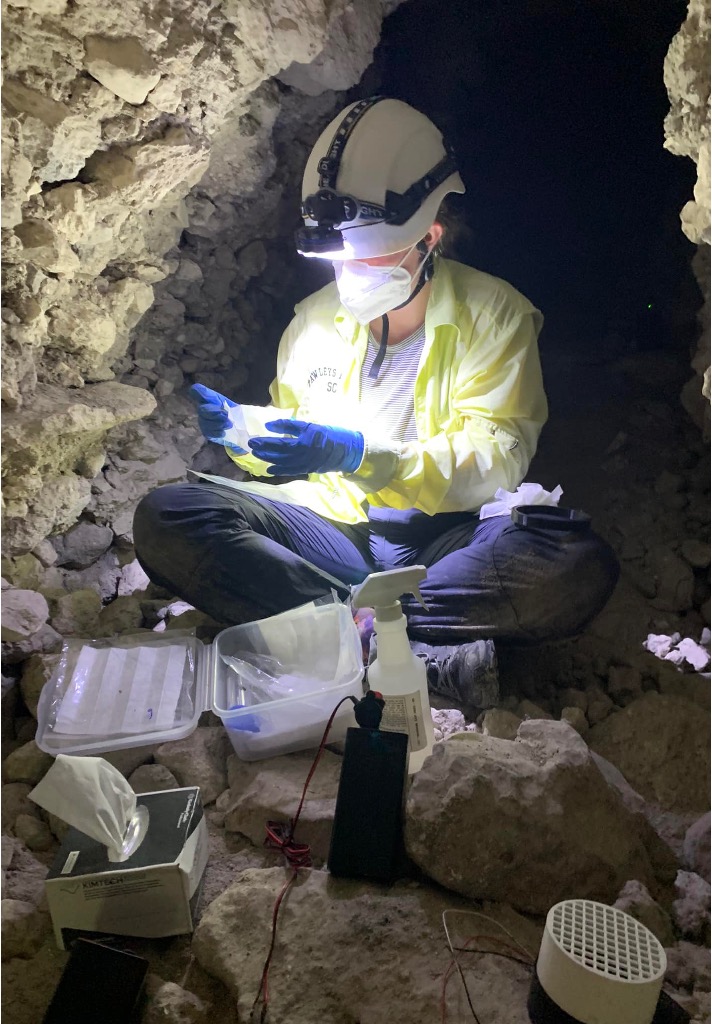
Following Curiosity
After completing her undergraduate degree at Western University and her PhD at the University of Guelph, Clare built a career using DNA to answer ecological questions. Her early work researching the diets of animals resulted in an opportunity to relocate and continue her work at the University of Bristol and Cardiff University, where she pioneered methods of identifying animal diets through DNA analysis.
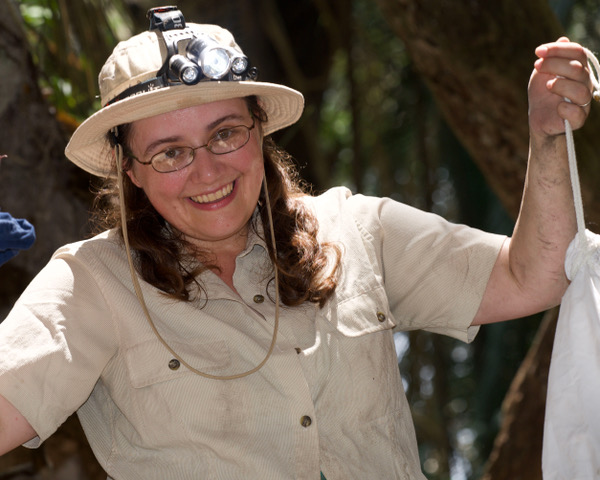
Over time, her focus shifted to environmental DNA – the genetic material organisms leave behind in their surroundings like fingerprints. While researchers had long collected this DNA from soil and water, Clare and her colleagues asked a different question: could it also be collected from the air?
The answer was yes. It just hadn’t been done before.
Using specially designed air filters, her team demonstrated that airborne DNA could be captured and analyzed to monitor biodiversity. The breakthrough attracted international attention and established Clare as a leader in the growing field of environmental DNA research.
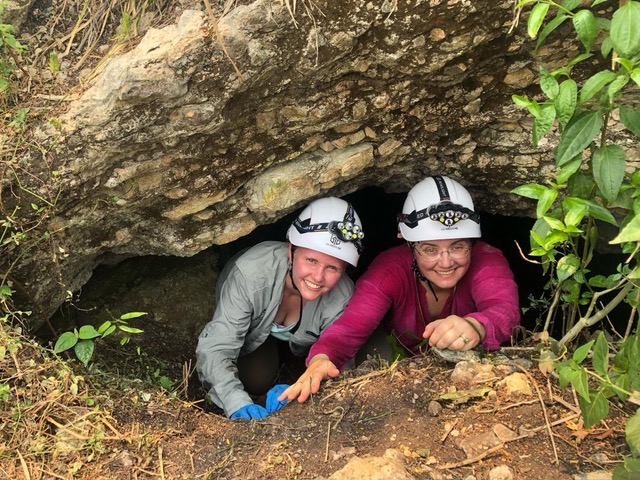
Today, her lab collaborates with partners around the world while mentoring students from across Canada and beyond. She conducts research around the world and recently she was elected to the Royal Canadian Society of Canada, in the College of New Scholars, one of the highest academic honours given in Canada.
Building the Next Generation
Today, Clare remains connected to the community where her scientific journey began. Whether mentoring science fair students at Preston High School or speaking to classrooms about biodiversity, her message to students is simple: pursue what interests you.
“Pick the subject you like and do it really well,” she says. “Doing something well opens up a lot of doors.”
For a student who once couldn’t choose between science and the arts, it’s advice grounded in experience.
“I wish someone had told me that you do not need to know right away what you want to do,” says Clare. “You can change your mind and try things out to see what fits.”
For Clare, the opportunities that shaped her career were rarely part of a carefully designed plan. More often, they were unexpected doors that opened because she was willing to say “yes” and walk through them.
Celebrating Alumni of the Waterloo Region District School Board (WRDSB)
Graduates of the Waterloo Region District School Board (WRDSB) are accomplishing incredible things in our community, our country and around the world. We are putting a spotlight on their success in their chosen pathways and how their time at WRDSB supported them to graduation and beyond. WRDSB provides students with a solid foundation for success, and we are excited to celebrate the contributions and achievements of WRDSB alumni.
Learn more about our incredible WRDSB graduates.